Sitting all day? What “exercise snacks” do for your body and brain
What research says about long hours of sitting, how short bursts of movement (exercise snacks) help, and how to fit them into a desk-based workday.
By the Gymodoro team · · 3 min read
Key takeaways
- Long, uninterrupted bouts of sitting are linked to worse health outcomes, separately from how much you exercise.
- Short, frequent movement breaks (exercise snacks) are a practical counter. Even 5 minutes of light walking every 30 minutes improved blood sugar and blood pressure in one lab study.
- The easiest way to get them is to tie them to something you already do, like the end of every focus session.
If you work at a desk, you might spend most of your waking hours sitting. A workout before or after work helps, but research increasingly suggests that how you sit matters too, especially how long you go without getting up.
What long sitting does
In a 2017 study published in the Annals of Internal Medicine, Keith Diaz and colleagues tracked nearly 8,000 adults with activity monitors. Both total sitting time and longer uninterrupted sitting bouts were associated with higher mortality risk. People who usually got up before 30 minutes had passed had the lowest risk.
These are observational findings, so they show an association rather than proof of cause. But they point in a clear direction: frequent interruptions to sitting appear to matter, not just your daily step count.
What are exercise snacks?
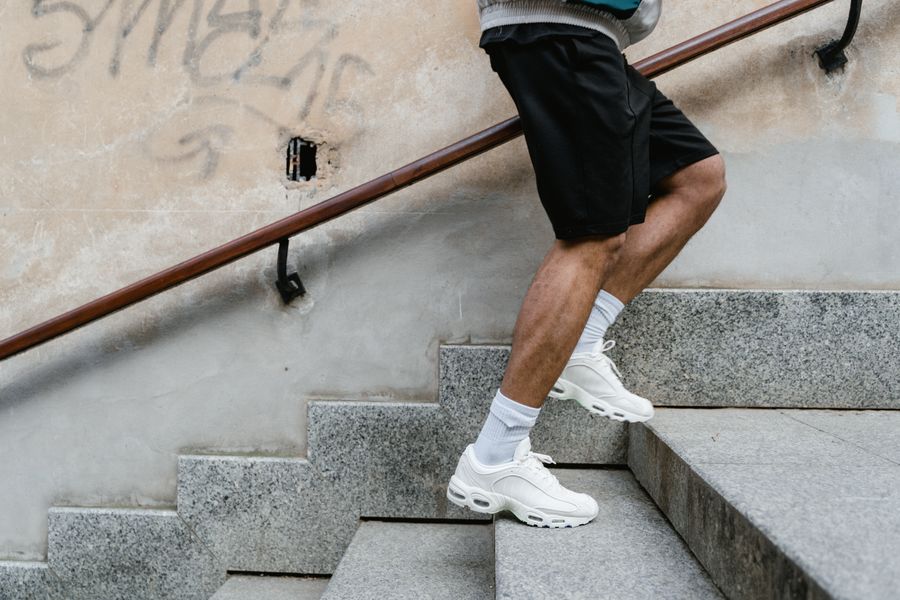
“Exercise snacks” is the informal name for very short bouts of activity, from under a minute to a few minutes, spread through the day. Climbing a few flights of stairs briskly, a set of squats, or a fast walk to the end of the corridor all count. They don't replace a full workout. They make sure the hours in between aren't completely still.
What the research shows
- Blood sugar and blood pressure: in a 2023 Columbia University lab study, adults who did 5 minutes of light walking every 30 minutes during 8 hours of sitting had much smaller blood sugar spikes after meals (reduced by close to 60%) and lower blood pressure than when they sat continuously.
- Short vigorous bursts: a 2022 study in Nature Medicine (Stamatakis and colleagues) using wrist-worn monitors found that people who regularly did around three 1–2 minute bursts of vigorous everyday activity a day, such as hurrying up stairs, had substantially lower risk of death from all causes over the follow-up period than those who did none. Again, this is observational.
- Mood and fatigue: a 2022 meta-analysis in PLOS ONE (Albulescu and colleagues) found that micro-breaks of 10 minutes or less reliably increased vigor and reduced fatigue at work.
What about the brain?
Movement and thinking are closely linked. Stanford researchers Oppezzo and Schwartz found people generated about 60% more creative ideas while walking than while sitting. Separately, a well-known 2011 study by Ariga and Lleras found that brief diversions from a long task helped people keep their performance from sliding over time. Both suggest the same practical idea: stepping away briefly helps you stay on task for longer.
How to build exercise snacks into a desk job
- Anchor them to a trigger. “Whenever I think of it” never works. “At the end of every focus session” does. A Pomodoro timer with exercise breaks gives you a trigger every 25–30 minutes.
- Keep them tiny. One exercise, two or three minutes. The goal is frequency, not intensity.
- Remove decisions. Keep a short list of go-to moves, or use an app that picks one for you.
- Mix in some vigorous bursts. A brisk stair climb or a fast set of squats a few times a day pushes your heart rate up briefly.
- Count them. Tracking active breaks turns an abstract health goal into a daily number you can beat.
Need ideas? Start with these 15 desk exercises for a 5-minute break.
The takeaway
You don't need to overhaul your life to sit less harmfully. Getting up regularly, for a few minutes of movement each time, is one of the most achievable health habits for desk workers. Gymodoro builds it into your focus timer, so every break becomes an exercise snack automatically.
Frequently asked questions
What are exercise snacks?
Exercise snacks are very short bouts of physical activity, from under a minute to a few minutes, done several times across the day, such as a brisk stair climb or a set of squats.
How often should I get up from my desk?
Research on sitting patterns suggests getting up at least every 30 minutes. A study from Columbia University found 5 minutes of light walking every 30 minutes improved blood sugar and blood pressure compared with continuous sitting.
Can exercise snacks replace a workout?
Not entirely. They are best seen as a complement: they break up long periods of sitting, while longer workouts build fitness. Both add toward the WHO's 150 minutes of weekly moderate activity.